




Due to high demand, all hand sanitizing products are experiencing extended production times. Please contact us to assist you with reserving inventory. Please allow flexibility in the delivery of orders. Dates cannot be guaranteed.
Marco Promos Blog
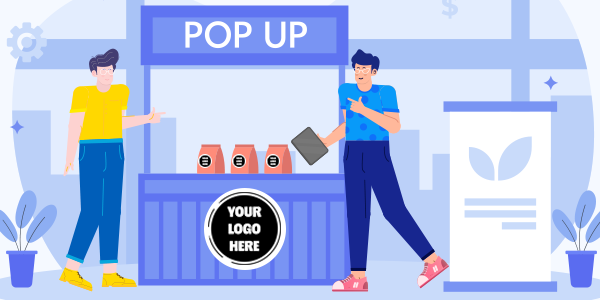
The Power of Pop-Up Company Stores: A Smarter Way to Manage Branded Merchandise
Apr 14, 2026
0
Managing branded apparel and promotional products can quickly become overwhelming—especially when you’re supporting events, employee programs, or limited-time campaigns. Between forecasting sizes, managing inventory, and coordinating distribution, even simple initiatives can turn into time-consuming projects.
Pop-up company stores offer a more efficient way to manage all of it. Designed for flexibility and built around on-demand ordering, they remove many of the traditional challenges associated with branded merchandise while creating a better experience for the people receiving it.
For organizations looking to simplify operations without sacrificing quality or brand consistency, they’ve quickly become a go-to solution.
What Is a Pop-Up Company Store?
A pop-up company store is a temporary, custom online storefront that is open for a limited time, typically two to four weeks. During that window, employees, customers, or event attendees can browse available items, select sizes, and place orders directly.
Once the store closes, everything shifts into production. Orders are aggregated, items are produced on demand, and products are shipped either individually or in bulk depending on the program.
This model removes the need to predict sizes, quantities, or preferences in advance. Instead of guessing what people want, you’re simply fulfilling what they actually ordered.
Why Pop-Up Stores Are So Effective
Zero Inventory Risk
Traditional bulk ordering requires estimating how many items to purchase and in which sizes. Even with the best data, this often leads to excess inventory, unused items, or the wrong size mix.
Pop-up stores eliminate that uncertainty entirely. Because every item is made to order, there is no leftover inventory to manage and no budget tied up in unused product. This is especially valuable for events or seasonal programs where demand can vary significantly.
Simplified Ordering Process
Coordinating apparel orders manually often involves spreadsheets, email threads, and multiple rounds of follow-up. It’s not just inefficient—it also introduces opportunities for error.
With a pop-up store, the process becomes much more straightforward. Users simply visit the store, make their selections, and complete their order on their own. Sizes, quantities, and preferences are captured automatically, which reduces administrative work and improves accuracy.
For internal teams, this shift alone can save a significant amount of time and effort.
Perfect for Events
Pop-up stores are particularly effective for events where apparel or merchandise is part of the experience. Instead of ordering in bulk and hoping it matches attendee preferences, you can open a store ahead of time and allow participants to choose exactly what they want.
This approach works well across a range of event types, including corporate events, conferences, fundraisers, and employee programs. It not only reduces risk, but also creates a more personalized experience for attendees.
It also pairs naturally with broader event planning strategies. For example, stores can be timed alongside registration, promoted through event communications, or used as part of post-event follow-up.
Increased Engagement and Perceived Value
When people have the ability to choose their own items, engagement tends to increase. Instead of receiving a standard product that may or may not fit their preferences, they’re selecting something they’re more likely to wear or use.
This shift has a few important benefits. It improves satisfaction, increases the likelihood that items will be used, and ultimately strengthens brand visibility over time.
Offering a curated mix of products—such as t-shirts, polos, outerwear, and accessories—gives users enough choice to feel personalized without becoming overwhelming.
Budget Control and Flexibility
Pop-up stores also provide flexibility in how programs are structured financially. Depending on the goal, organizations can choose from several models:
- Fully company-paid programs for employee apparel or events
- Subsidized models where users receive an allowance or credit
- Employee-paid options for optional purchases or expanded selections
This flexibility allows teams to maintain control over the spend while still offering a high-quality experience. It also makes it easier to scale programs across departments, locations, or event types.
Best Use Cases for Pop-Up Stores
Pop-up stores are not limited to one type of program. They can be adapted to support a variety of initiatives, depending on how your organization uses branded merchandise.
They are especially effective for:
-
- Event apparel where sizing and preferences vary widely
- Employee apparel programs that refresh throughout the year
- New hire onboarding where individuals can select their own sizes and styles
- Fundraisers or community events that benefit from made-to-order fulfillment
- Because the model is flexible, it can support both one-time initiatives and recurring programs without requiring a completely new setup each time.
What Makes a Pop-Up Store Successful?
While the model itself is efficient, the success of a pop-up store still depends on how it’s executed. A few key elements tend to make the biggest difference.
A well-curated product selection is one of the most important factors. Offering a mix of core items and slightly elevated options gives users meaningful choice without overwhelming them. Too many options can slow decision-making, while too few can limit engagement.
Timing also plays a critical role. A clearly defined open and close window creates urgency, which encourages users to take action rather than putting it off. Simple reminders leading up to the close date can significantly increase participation.
Finally, visibility matters. Even the best-designed store will underperform if people are not aware of it. Promoting the store through internal communications, email campaigns, or event messaging helps ensure it reaches the intended audience.
Behind the scenes, ease of use is just as important. A clean, mobile-friendly experience with clear product images and simple navigation makes it more likely that users will complete their orders without friction.
Pop-Up Stores vs. Always-On Stores
While traditional company stores that remain open year-round have their place, pop-up stores often outperform them in specific scenarios.
| Feature | Pop-Up Store | Always-On Store |
|---|---|---|
| Inventory Risk | None | Sometimes required |
| Urgency | High | Low |
| Engagement | High | Moderate |
| Best For | Events, campaigns | Ongoing programs |
The key difference is urgency. Pop-up stores create a defined window for action, which tends to drive higher participation. Always-on stores, while convenient, often lack that same sense of momentum.
In practice, many organizations use both. Always-on stores support ongoing needs, while pop-up stores are used for targeted campaigns, events, or seasonal initiatives.
Where Pop-Up Stores Fit into a Broader Merchandise Strategy
Pop-up stores are most effective when they are part of a larger, more intentional approach to branded merchandise.
Rather than managing each initiative separately, organizations can use pop-up stores to support specific moments—events, campaigns, onboarding—while maintaining consistency in branding and product selection. This creates a more cohesive experience across programs.
Working with a partner that understands both the operational side and the strategic side of merchandise programs can also make a difference. From product curation to store setup and fulfillment, having the right support in place allows teams to focus less on logistics and more on outcomes.
Final Thoughts
Pop-up company stores are more than just a convenient ordering tool. They represent a shift toward a more flexible, efficient way to manage branded merchandise.
By removing inventory risk, simplifying ordering, and giving users more choice, they improve both the operational side of merchandise programs and the experience for the people receiving the products.
Whether you’re planning an event, launching a seasonal apparel program, or looking for a better way to manage internal ordering, pop-up stores offer a practical solution that adapts to how modern organizations operate.
If your current process still relies on bulk ordering and manual coordination, it may be worth rethinking your approach. Pop-up stores don’t just make things easier—they make them more effective.

Becky Gruenhagen
0 Comments
Post
Cancel
SEARCH BLOGS
RECENT POSTS
Calendar of Upcoming Events: Q4 (October–December)
26 Aug, 2026
Marco Marketing Team
0
The fourth quarter is filled with opportunities to connect promotional campaigns to causes, apprecia...
The Ultimate Guide to Custom Logo Sweatshirts & Pu...
18 Aug, 2026
Becky Gruenhagen
0
Custom logo sweatshirts and pullovers have come a long way from basic athletic wear. Today’s options...

The Ultimate Guide to Back-to-School Logo Apparel ...
07 Jul, 2026
Becky Gruenhagen
0
As the school year approaches, it’s time to think beyond backpacks and school supplies. Back-to-scho...

2026 Back-to-School Trends: Smart Promotional Prod...
24 Jun, 2026
Marco Marketing Team
0
At MARCO, we know back-to-school is more than a seasonal rush. It’s one of the biggest opportunities...

How to Get Your Performance Apparel to Last Longer
09 Jun, 2026
Becky Gruenhagen
0
Whether you picked it up at a charity 5K, got it from your employer, or received it as part of a tea...
CONTRIBUTORS

Dick Nelson
CEO

Melissa Bertram
Merchandise Manager

Shelley Borst
Merchandise Coordinator

Stephanie Krause
Merchandise Coordinator

Ken Arch
Director of Production
|
Oops, your browser is no longer supported. We have detected that you are using an outdated and unsupported browser. Our website works with a wide range of browsers and an upgrade to a modern, fully supported browser version is not required, but it is strongly recommended so that you can benefit from the all of the features and helpful tools. |
|||
| Get the latest. | |||