Go Green... Understanding Eco-Friendly Promotional Products
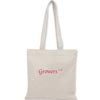
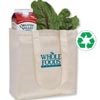
Organic Cotton
On many traditional cotton farms, the soil is most often sterile because of the depletion of nutrients and pesticides. As a result, farmers must rely on additives, synthetic fertilizers and pesticides, plus vast quantities of water to keep their crops growing. In contrast, organic farming restores and builds up the soil, increasing its organic content which, in turn, increases its water-sustaining ability. The rich, moist earth results in stronger plants, which improves the soil even more. Far less water runs off organic fields, and what does run off is not polluted with pesticides or synthetic fertilizers. Organic cotton must be processed separately from conventional cotton and machines must be cleaned to avoid contamination. For 100% organic products, only environmentally friendly chemicals that meet organic fiber processing standards are used. Cotton is a natural fiber and therefore is also biodegradable.
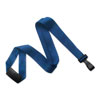
Recycled Fabrics
Recycling begins with discarded materials (such as water bottles and yogurt containers) which are stripped of their labels and lids, crushed, baled, washed and smashed. They are turned into pellets, which are then made into PET fibers that are then spun into yarn, woven or knit into fabrics and made into finished products.
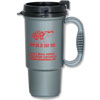
"Green" Plastics
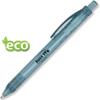
Corn plastics are made from PLA (polylactide/polylactic acid). PLA is made from corn. Corn plastic products look and feel just like regular plastic, but they are 100% biodegradable and compostable. In commercial composting conditions, PLA will compost in approximately 30-45 days. Most landfills are not designed to allow biodegrading of their contents. With that being said, PLA will react in landfills like other organic waste such as food. Since PLA is made from a renewable resource - corn - instead of regular plastic that is made from oil, our dependence on foreign petroleum is reduced, benefiting the U.S. farm economy.
Many other plastic materials can be reused, recycled or are already recycled from their previous uses. PETE plastics can be recycled into non-organic threads that can be woven into durable fabrics. Promotional products made from polyethylene plastics can be recycled into items such as furniture, plastic lumber and fencing, and other household and office items.
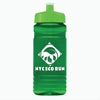
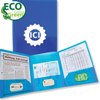
Enhanced Biodegradability
An additive added to products that extends the polymer chain of plastic and allows the microorganisms to enhance the breakdown of the plastic. Products with this additive breakdown in a landfill or compost heap in just 1-5 years. Products with enhanced biodegradability have the same shelf life and other properties of products without the additive and are not affected differently by heat, air or sunlight. This additive contains no heavy metals and is recognized as safe by the FDA for food contact.
What Do the Recycling Symbols Mean?
 Polyethylene Terephtalate A.K.A. PETE or PET: (virgin Poly) is a plastic commonly used in custom imprinted water bottles. When recycled, it is usually a re-grind of the bottle transforming it into yarn for carpets, promotional tote bags or fiberfill material in winter clothing.
 High-Density Polyethylene A.K.A. HDPE: Semi-rigid plastic often found in milk jugs and promotional sports bottles ideal for outdoor activities. #2 polyethylene plastics can be recycled into plastic crates, furniture or plastic fencing.
 Polyvinyl Chloride A.K.A. PVC: Can be both a flexible or rigid form of plastic sometimes found in items such as printed binders or personalized vinyl envelopes or folders and later reused in common items like flooring, labels & plastic emblems.
 Low-Density Polyethylene A.K.A. LDPE: A tough and flexible thermoplastic made from petroleum that can be easily heat-sealed to produce recyclable promotional items such as plastic shopping bags. Items like furniture, plastic lumber and garbage cans are often made out of recycled LDPE.
 Polypropylene A.K.A. PP: Described as a strong and lightweight thermoplastic polymer often used to construct earth-friendly non-woven promotional bags & totes. When Polypropylene items are done with their initial usage, they can be recycled into items like ice scrapers & plastic rakes.
 Polystyrene A.K.A. PS: A rigid transparent plastic commonly used in custom imprinted plastic cups & tumblers. After being recycled, items made from PS can be reformed into insulation, picture frames & rulers.
 Other: Promotional items marked with the "7" symbol contain a mixture of multiple chemicals and include all items that are not easily classified by the previous 6 codes like large capacity water containers. Items in the category are most difficult to recycle but are often made into items like plastic lumber.